
How Does The Packaging Material Affect The Preservation Of Green Coffee?
Poor storage of green coffee beans or too long storage will reduce the flavor and aroma of the roasted coffee, which will cause great losses to farmers, traders, and roasters. However, the consumption of green coffee beans will inevitably be unavoidable with prolonged storage time. If the proper packaging can be selected for preservation, it can effectively extend and improve the shelf life and quality of green coffee beans.
So, which one is better, burlap bag, high barrier bag, or vacuum packaging? How will these packaging materials affect the storage of coffee beans? How do we measure the difference?
The Packaging Material Of Green Coffee Beans
Some common materials include burlap bags, breathable plastics, high-barrier plastics, vacuum bags, etc.
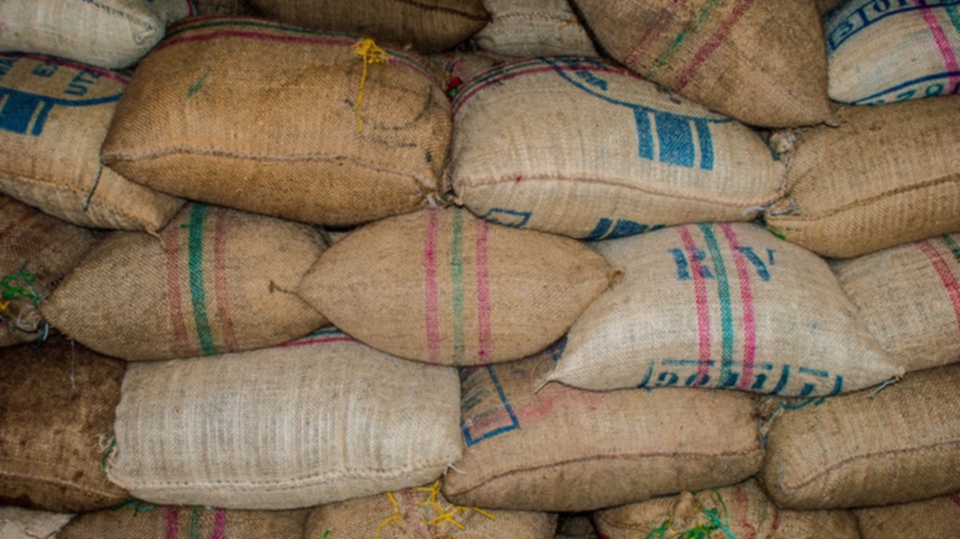
Burlap Bag
Canvas made from natural fibers extracted from plants, jute, or hemp is the most traditional material used to make coffee bags. This is an environmentally friendly option. The Food and Agriculture Organization of the United Nations stated that it is a 100% biodegradable and recyclable material. It is environmentally friendly, durable and economical, and is the oldest coffee packaging material to date.
However, burlap bags cannot provide moisture-proof or anti-oxidant effects. This is why the poor quality of coffee and even mildew and other defects is because burlap bags are permeable.
In addition, traditional linen bags can hold 60 kg of coffee (70 kg in some countries or regions). At the same time, large plastic bags and wooden boxes can store 1 to 20 tons of green beans. Depending on the batch stored or transported, the manufacturer may choose a larger and more efficient packaging material.
Plastic
Plastic bags for green beans are most often made of polyethylene or polypropylene, ranging from 60 kg bags, large bags, and container linings. Compared with linen, plastic is cheaper and more resistant to moisture and oxygen, but it is still permeable.
High Barrier Bag
High-barrier bags are packages with different compositions and structures, preventing gas and water in the interior and the air from circulating. This kind of packaging has high impermeability.
Although high-barrier bags are more expensive than other types of packaging, they are designed to prevent chemical reactions between moisture and oxygen to maintain the quality of coffee. You can find high-barrier packaging in various sizes, including container linings.
Vacuum Packaging
After the coffee is vacuum packed, it must be stored in an impermeable plastic bag. Then, in addition to sealing and isolating the green beans, negative pressure is also generated to remove all air in the bag.
It is generally believed that multi-layer vacuum packaging is the most effective way to maintain the quality of green coffee beans. However, this method is usually only used for packaging samples or micro-batch, nano-batch specialty coffee due to the high cost.
Define The Degradation Reaction Of Coffee
The degradation of coffee is a chemical change, which leads to a decrease in the flavor and aroma of the beans, especially the sweetness and acidity. Cupping by a professional Q grader in accordance with the specifications of the Specialty Coffee Association is still the most common method of measuring coffee quality. However, there are other ways to track coffee degradation.
Some of these methods do not focus on the sensory quality of drinking coffee but on the chemical composition of coffee beans and their relationship with cupping flavor. Although this is a relatively new field, these studies allow us to understand the time of flavor decay even before the coffee significantly degrades with the aid of taste and smell. Nuclear magnetic resonance (NMR) and Raman spectroscopy are the two methods used for this.
The coffee samples included both natural and pulped natural coffee, and the cup scores both exceeded 84 points. Three materials of 30 kg packaging are used: permeable paper packaging without barriers, paper packaging with high impermeable barrier plastic bags inside, and vacuum packaging. The coffee is analyzed every three months for a total of 18 months.
Influence Of Bag Material: 0-6 Months
Although different packaging materials were used in the first six months, Q-level scorers had no way to clearly distinguish the significant difference in cup scores between natural and pulped natural coffee, no matter what material the green beans are packaged within. In the first six months, the possibility of detecting sensory differences in specialty coffee is very small because the differences are also very small.
When using NMR and Raman spectroscopy to analyze samples stored in porous bags chemically, the changes in these samples can be seen differently in three months and six months. However, the pieces stored in waterproof bags did not have any noticeable chemical changes.
This proves that the chemical composition of the coffee changes very early, and a professional cup tester will only notice this change after it has been stored for more than six months.
Suggested Practice
Although the cupping scores may not necessarily show the difference in the quality of green beans by different packaging materials, whether they are packed in burlap bags or high-barrier waterproof bags, the beans have begun to degrade.
It is recommended to store the green coffee beans in a multi-layer high barrier structure after processing, which can be in the form of large bags, ordinary sacks, or linings.
Good natural and pulped natural coffee should be stored in high-barrier bags immediately after standing for some time.
In the warehouse, large bags and high barrier linings help save inventory space and reduce costs. For smaller batches and convenient transportation, high barrier bags are more practical than burlap bags.
Influence Of Bag Material: 6-18 Months
When green beans are stored for more than six months, the cupping score of coffee stored in permeable packaging will decrease. The sensory differences are already amazing.
The original pulped natural coffee with a cupping score of 85-86 was stored in a permeable package. After nine months, its cupping score was lower than 80, and it was recognized as a commercial bean. After 18 months, the cup score was even lower than 75 points. In contrast, the same coffee stored in an impermeable bag for one year still maintained a cupping score of 83-84, but it also dropped to 82 after 18 months.
The research found negligible differences for the permeable packaging with high permeability compared with vacuum packaging.
Different from the previous six months, the treatment of green coffee beans had a major impact at this stage.
Suggested Practice
It is recommended to put specialty coffee in an airtight bag immediately after storage (as long as it is high-quality). This is even more imperative after six months. This is especially true for coffee processed with some or all of the pulp. Among them, sun-dried coffee is particularly prone to degradation reactions.
It is worth noting that this research is based on research conducted on coffee in a stable environment. Coffee in transit (especially coffee to be transported across seas) may be exposed to higher humidity. Without the protection of impermeable packaging, there will be a higher risk of degradation, and container ships may also help reduce this risk of degradation.
For specialty coffee, it is very important to maintain the quality of coffee beans for as long as possible. Good preservation can protect the value of coffee and the hard work of producers and allow positive business contacts between traders and roasters. Pay attention to packaging materials (especially bags used for natural and pulped natural coffee), which can significantly reduce the degradation of coffee beans over time so as not to spoil the essence of the beans.
